

How to Deal With Leaking Downpipe Repair
If a downpipe is leaky it is important to remove the blockage and replace the damaged part of pipe as soon as is possible. Epoxy putty is a good choice to fix most kinds of downpipe.
Clean the area first and remove any loose paint or rust, as well as any other debris. Cut a length of repair tape and wrap it around the joint, ensuring that the ends overlap.
Clean the area
Following a leak, the first thing to do is to eliminate any standing water and clean the area. Make use of a vacuum cleaner to eliminate any remaining water and clean the walls and floors affected by the leak. This can also help prevent the development of mildew and mould which can happen if the affected area is not dried properly.
Next, check for obstructions. Blockages in the downpipes cause water to overflow which causes damage to your walls, guttering and foundations. Blockages can be caused by twigs, leaves and other debris in your downpipe and guttering. Ice can also cause blockages when temperatures are colder.
In some instances, the leaking downpipe may simply be blocked. You may be able remove this using an hose pipe and bit of wire or drain rod. It is crucial to clean your guttering and downpipe frequently to avoid the build-up of dirt that can cause blockages.
If you're unable to get rid of the blockage, the part of the downpipe beneath the leak might have been damaged and needs to be replaced. This will involve removing the old downpipe and replacing it with a new one, with fittings and connectors.
Before you begin the process of repairing the downpipe, make sure that you're safe by wearing rubber gloves and safety glasses. If you're working from a the height of your work, make sure you utilize a sturdy ladder and ask someone to assist you. If you are unable reach the downpipe on your own It is a good idea to ask someone to stand at the bottom of the ladder to hold the hose and turn it to full flow to flush the downpipe and clear the obstruction. This will allow you work starting from the top downpipe and make sure you don't miss any areas that require repair. If the blockage persists, it is best to remove the hose from the downpipe, and then use a plumber's snake for clearing the obstruction.
Repair the joint
It is recommended to begin any plumbing repair by locating the leak. Next, clean and dry the area. This will ensure that the sealant sticks properly. Switch off the water supply near the leaky portion of pipe before you begin.
This is particularly important in the event that the downpipe is supplying potable water, as you don't want to be working with pipes that are leaking!
Leaks in downpipes often occur around the joins. This is because the joints are exposed to harsh weather and the accumulation of dirt and other debris.
After you have cleaned and dried the area, cut a piece of tape about one centimetre larger than the length of the leak. Remove the backing paper from the tape and wrap it around the joint. Once the tape is secured, apply a large amount of roof and gutter sealant to both sides of the joint. Press with a firm pressure to ensure a good seal.
If the leak is located on a cast iron downpipe, it could be due to one of the fixing screws or nails have come loose. Easily remedied by replacing the screw with a new galvanised screw. The downpipe could also be loose because of an ineffective wall connector. If the downpipe that is leaking appears to be plastic, it could mean that the retaining clip is loose and needs to be replaced.
PEX leaks can result from the connector being crimped, but does not seal completely. This can be easily fixed by using an PEX Crimp tool and test gauge that is typically included with the Crimp tool.
Additionally, epoxy putty is an alternative to a leaking downpipe, as it can be made into a sausage-like form to fit the pipe joint. Apply the putty following a wipe of the pipe surface dry. Make sure to completely cover the crack or hole.
It's worth contacting a professional plumber if the leaky drain is causing severe damage to your property or is stopping rainwater from entering your home. This is a cost-effective and stress-free solution. It is also important to maintain your gutters on a regular basis to avoid future issues, such as downpipe leaking.
Seal the joint
Leaks can develop at joints that connect your downpipe, particularly when it's made of various materials. Make sure these joints are clear of obstructions that can prevent water from flowing freely, and can cause damage.
Regular cleaning will help you spot problems early and take preventative action However, sometimes things go wrong and a quick fix is needed to stop the leak. You can create an interim seal by using a few different products.
First, clean the area around the leak to eliminate dirt and loose paint. Dry the area and then score it using sandpaper. This will prepare it for the repair compound. Mix the ingredients of the putty and knead until the mixture is malleable. Apply the putty with a firm pressure over the leak, covering the edges. Cover the area that has been repaired with a bandage and wait several minutes or as suggested by the manufacturer's instructions to allow the cast to set.
Pipe repair clamps are used to repair leaky downpipe joints. They are available in various sizes depending on the gutter's width. These devices make use of an aluminum band and a rubber gasket secured with bolts to temporarily fix leaks at the pipe's end or along its length. Remove the bolts that are holding the clamp and move it over the leaky joint. Then tighten the bolts until the rubber gasket is pressed against the pipe.
Repair sleeves are a different option to fix leaky downpipe joints. These sleeves are flexible enough to wrap around a leaking joint and work on polyvinyl chloride (PVC) pipes. Self-fusing tape can be used to create a compression seal which will withstand water for as long as three years if it is applied correctly.
PEX (pressurised ethylene) pipe leaks are usually caused by a defective the crimp on a connection. These leaks can be repaired with specialized tools. You'll need to use a specialised tool that has an array of test gauges (also called "go/no go" gauges) that are sized to match the dimensions of your PEX pipes. If the crimp has failed you can simply re-crimp it using the correct tool.
Clear the obstruction
The water damage in homes is usually caused by blocked downpipes. They can cause flooding, damp walls and roof damage. It is important to clear a blockage quickly and effectively to avoid further damage.
If you've got a blocked downpipe, the initial thing to do is shut off the water supply. Clean any debris from the gutters or surrounding area that may be blocking the pipe. Also, wear rubber gloves and a mask to shield yourself from any dangerous substances.
A garden hose can be used to spray water down the downpipe to clear any obstructions. If this doesn't work, consider using a plumbing snake. RepairMyWindowsAndDoors can be bought on the internet or at your local hardware store. Some are specially designed to be used for drainpipes, and they come in a variety of sizes. Drain snakes can be especially beneficial in the event that you have a substantial amount of debris that is preventing the flow of water.
You can also deblock the downpipe by using a rod or wire. Avoid sharp objects, and ensure that you are standing on a sturdy ladder. If the downpipe is located near electrical fittings, fixtures or cables, ensure they are turned off prior to starting work. Wearing safety goggles, rubber gloves and safety glasses is also recommended.
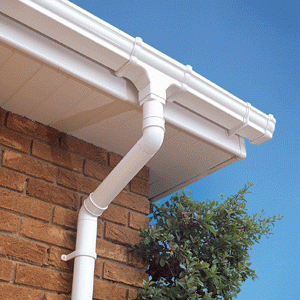
A accumulation of water on the wall and at the bottom of gutters is a further indication of a blocked downpipe. This can cause dampness and contribute to the growth of mould. It is possible to prevent this by regularly cleaning your downpipes and gutters and keeping tree branches that hang overhanging kept tidy.
Downpipes that are blocked can be difficult to clean and it is essential to take care of them as soon as you can to avoid further damage to your home. However, if you don't have the time or desire to clean your downpipe yourself It might be worth calling in a professional. They will have the necessary equipment and expertise to tackle more complex blockages and can provide a quick and efficient solution. They can also give you suggestions on how to keep your downpipes, and reduce the likelihood of future blockages.